USDA Announces $8 Billion in Farm Aid as Rising Fuel Costs Pressure American Agriculture
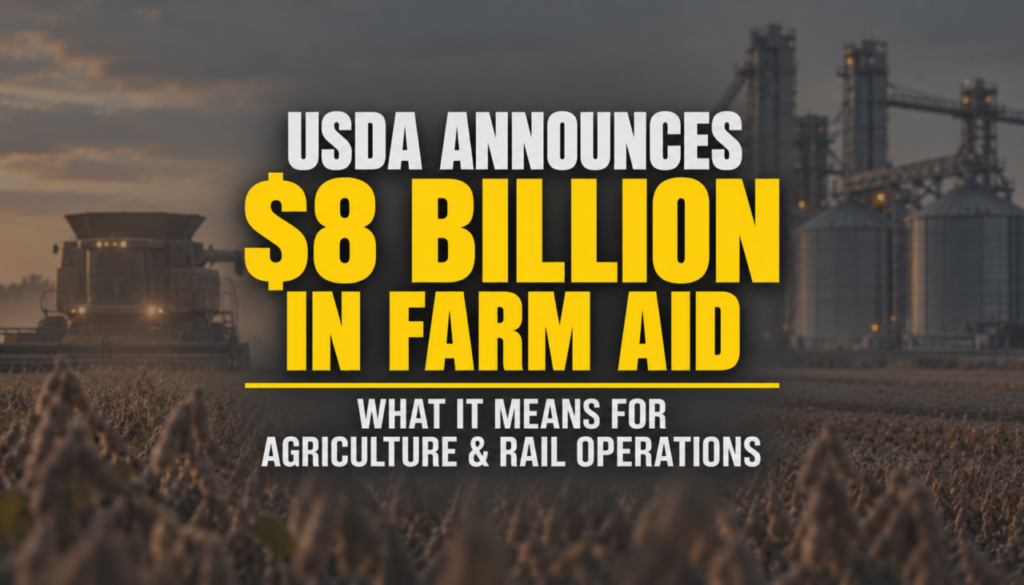
New Harvest Fuel Relief program aims to help farmers manage higher operating expenses during the 2026 harvest season, highlighting challenges across the agricultural supply chain.
American farmers are facing another challenging harvest season as rising diesel prices, increased production expenses, and fluctuating commodity markets continue to put pressure on agricultural operations across the country.
On October 19, 2026, the U.S. Department of Agriculture (USDA) announced $8 billion in new financial assistance through its Harvest Fuel Relief program, designed to help farmers offset elevated fuel expenses and other economic pressures affecting the 2026 crop year.
The assistance comes at a critical time for agricultural producers, when diesel-powered equipment is operating for extended periods, harvested crops are moving into storage, and grain transportation networks are working to keep commodities flowing to domestic and international markets.
For farmers already managing higher equipment, labor, and transportation costs, the program is intended to provide financial relief during an especially demanding period.
How the $8 Billion Farm Relief Program Will Work
The Harvest Fuel Relief program will provide one-time payments to eligible agricultural producers through the USDA’s Farm Service Agency (FSA).
Rather than reimbursing farmers for individual fuel purchases, the program will calculate assistance using a standardized formula designed to cover a portion of estimated losses during the 2026 crop year.
Payment calculations will consider planted acreage reported to the FSA, USDA production cost estimates, and commodity yield and price data from the World Agricultural Supply and Demand Estimates.
The USDA expects to announce commodity-specific payment rates for major crops, including corn, soybeans, and wheat, in November 2026. Payment methodologies for other eligible commodities will be announced separately.
Farmers will not be required to participate in crop insurance programs to qualify for assistance.
The USDA is encouraging eligible producers to establish a Login.gov account connected to USDA services ahead of the application period. A specific application timeline and payment distribution schedule have not yet been announced.
The new program follows additional agricultural assistance earlier this year, including $12 billion in Farmer Bridge Assistance payments distributed to more than 560,000 producers.
Source: USDA — Harvest Fuel Relief Program Announcement, October 19, 2026
Why Rising Fuel Costs Are Such a Significant Challenge
Diesel fuel is essential to nearly every stage of modern agricultural production.
From tractors and combines operating in the field to trucks transporting harvested grain, fuel expenses directly influence the cost of bringing agricultural commodities to market.
These costs become particularly significant during harvest, when equipment operates for extended periods and large quantities of crops must be moved from fields to grain elevators, storage facilities, and processing plants.
But fuel is only one part of the financial challenge.
Farmers must also manage fertilizer costs, equipment maintenance, labor expenses, financing, and changing commodity prices. When production expenses rise faster than the prices farmers receive for their crops, profit margins can tighten considerably.
The new Harvest Fuel Relief program is intended to offset some of these pressures, although the assistance will not necessarily cover the full financial impact experienced by individual producers.
According to agricultural industry publication Feed & Grain, the USDA has not yet specified what portion of modeled losses the payments will cover.
Source: Feed & Grain — USDA Plans $8 Billion in One-Time Harvest Fuel Relief Payments
The Financial Pressure Extends Beyond the Farm
The economic challenges facing agricultural producers are also relevant to the businesses responsible for handling, processing, and transporting their products.
Grain elevators, agricultural processing plants, rail terminals, and bulk-material handling facilities are essential links in the supply chain.
After harvest, millions of tons of corn, soybeans, wheat, and other commodities must be received, stored, transferred, processed, and transported to customers.
Each stage requires equipment, personnel, energy, and coordinated operations.
Rail transportation plays a particularly important role in moving large agricultural volumes over long distances. Many grain elevators and processing facilities rely on railcars to transport commodities efficiently to manufacturers, livestock feed operations, export terminals, and other destinations.
As operating expenses rise throughout agriculture, efficient railcar movement, dependable equipment, and consistent loading operations become increasingly valuable.
For facilities handling high volumes of grain, minimizing unnecessary delays and maintaining productive workflows can help control costs.
Agriculture’s Complicated Relationship with Fuel
The rising fuel costs behind the USDA’s relief announcement also highlight an interesting relationship between American agriculture and the nation’s energy supply.
Farmers depend heavily on diesel to operate equipment, harvest crops, and transport commodities. Yet agriculture also supplies many of the raw materials used to manufacture renewable transportation fuels.
Corn is the primary feedstock for domestic ethanol production, while soybean oil is an important ingredient in biodiesel and renewable diesel.
That connection is becoming increasingly significant.
According to the U.S. Energy Information Administration (EIA), domestic biofuel production is expected to grow in 2026, supported by higher renewable fuel blending requirements, elevated petroleum fuel prices, and additional production capacity.
The EIA forecasts ethanol production will increase approximately 2% in 2026, while renewable diesel production is projected to rise 24% and biodiesel production 41% compared with 2025.
For farmers, growing biofuel production represents another source of demand for agricultural commodities. For soybean producers in particular, biodiesel and renewable diesel create a direct connection between their crops and the diesel fuel market.
However, increased biofuel production does not automatically translate into lower fuel prices for agricultural producers. Petroleum prices, refining capacity, feedstock costs, transportation, and fuel distribution all influence what farmers ultimately pay.
The relationship also extends into agricultural infrastructure.
Ethanol plants, soybean crushing facilities, and renewable fuel producers depend on transportation networks to receive raw materials and distribute finished products. Many rely on rail transportation to move large volumes of grain, oil, fuel, and processing byproducts.
As the industry works to manage rising costs, efficient grain handling, railcar movement, and bulk-material transportation remain important throughout the agricultural supply chain.
Source: U.S. Energy Information Administration — Higher Blending Targets Drive Biofuel Markets
Keeping Agricultural Commodities Moving Efficiently
Whether agricultural commodities are destined for food production, animal feed, renewable fuels, or export markets, rising operating costs make efficiency increasingly important.

For grain elevators, processing facilities, and rail-served agricultural operations, keeping materials moving without unnecessary delays is one way to manage those pressures.
Industrial wireless remote control technology can support these operations by providing greater flexibility when positioning railcars and coordinating material handling activities.
At facilities where locomotives are used to move railcars for loading and unloading, wireless locomotive remote control systems allow qualified operators to control locomotive movements from outside the cab.
This can help streamline railcar positioning, reduce unnecessary movement between operating locations, and improve coordination with loading equipment and facility personnel.
Control Chief Corporation manufactures industrial wireless remote control solutions designed for demanding rail and material handling applications.
The company’s TrainChief® Plus and MU&Go® Plus locomotive remote control systems support industrial rail operations, including applications at grain elevators, agricultural processing facilities, and other bulk-material handling locations.
Control Chief’s Load-Out Management System also provides control capabilities for facilities managing railcar loading operations.
As agricultural businesses continue looking for ways to manage costs and maintain productivity, reliable equipment and efficient workflows remain important parts of their operations.
Looking Ahead for American Agriculture
The USDA’s $8 billion Harvest Fuel Relief program reflects the significant financial challenges facing American agriculture during the 2026 harvest season.
While the assistance is intended to provide some immediate financial support, producers and agricultural businesses will continue navigating changing fuel prices, transportation expenses, and commodity markets.
At the same time, growing demand from ethanol, biodiesel, and renewable diesel producers continues to connect agriculture with the nation’s energy industry, creating additional markets for crops and supporting activity throughout the agricultural supply chain.
From farms and grain elevators to processing plants and rail terminals, maintaining efficient operations will remain essential to keeping agricultural commodities moving.
As the industry adapts to changing economic conditions, dependable equipment, productive workflows, and efficient transportation infrastructure will continue playing an important role in supporting American agriculture.
About Control Chief Corporation
For more than 55 years, Control Chief Corporation has manufactured industrial wireless remote control systems for locomotive, crane, material handling, and other demanding industrial applications.
Control Chief’s products are designed to support reliable equipment operation, efficient workflows, and productivity in industrial environments.
Learn more about Control Chief’s locomotive remote control systems and other industrial wireless control solutions.