U.S. Grain Storage Capacity Growth Has Stalled — What It Means for Markets and Logistics
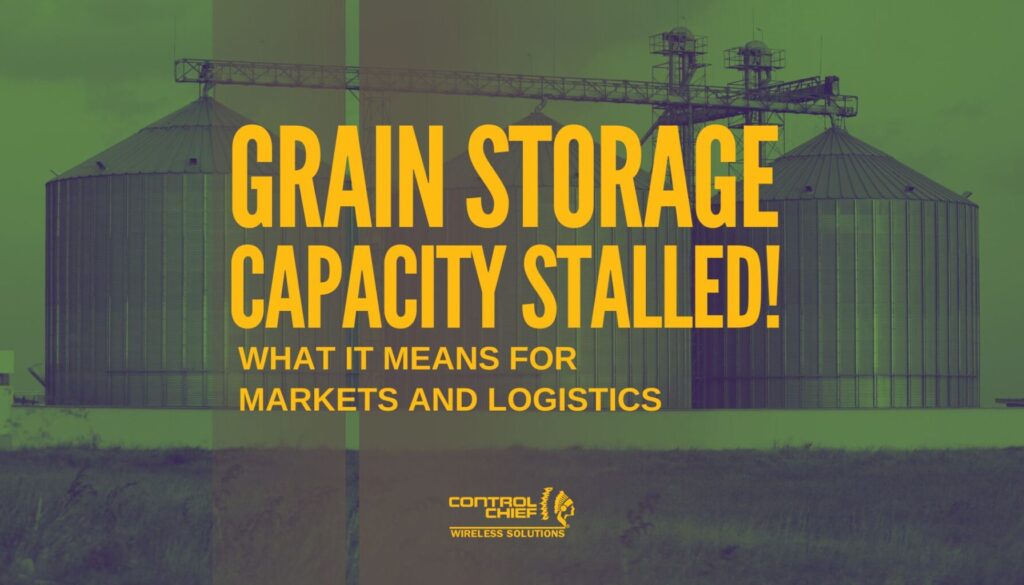
After nearly two decades of steady expansion, U.S. grain storage capacity has largely stopped growing — even as crop production continues to trend higher.
That tightening gap between production and available storage is raising important questions for grain merchandisers, elevators, processors, and exporters. With export demand showing renewed strength and global trade flows shifting, infrastructure — not just supply — may become the next major pressure point in U.S. grain markets.
Grain Storage Capacity: Growth Has Flattened Since 2020
According to a recent analysis from the University of Illinois published on Farmdoc Daily, U.S. grain storage capacity grew consistently from 2000 through 2019. However, since 2020, that expansion has largely stalled.
The Farmdoc analysis notes:
- The 2025 bumper corn crop pushed on-farm storage utilization to roughly 80%.
- Total U.S. storage capacity now sits just 5% above total production — the smallest margin since the late 1980s.
- Elevated construction costs, higher interest rates, and long-term production uncertainty are limiting new investment.
If production continues to increase without meaningful storage expansion, the industry could see:
- Wider basis swings
- More seasonal price volatility
- Logistical bottlenecks during harvest
- Increased strain on rail and river systems
🔗 Source: Farmdoc Daily – “US Grain Storage Capacity Growth Has Stopped”
Strong Export Demand Is Tightening the System
While storage growth has slowed, export demand remains robust.
In a recent episode of Grain Markets and Other Stuff, analysts discussed the February USDA WASDE report and highlighted significant strength in corn exports.
Key takeaways from the report and commentary:
- USDA lowered U.S. corn ending stocks due to stronger export forecasts.
- Projected corn exports for the current marketing year could reach 3.3 billion bushels — potentially exceeding last year’s prior record by 15.5%.
- Soybean futures strengthened amid optimism that China may increase U.S. soybean purchases.
- U.S. soybean stocks-to-use ratio sits at 8.2% — a relatively tight domestic balance sheet.
Despite global soybean supplies remaining comfortable, domestic U.S. balance sheets appear firmer — particularly if Chinese demand accelerates.
The takeaway: Grain is moving.
As one analyst noted, “We are selling and shipping corn like it’s going out of style.”
The Basis Risk and Supply Chain Question
When storage capacity remains flat while production rises, the result isn’t necessarily a shortage — it’s a timing problem.
Without additional bin space:
- More grain may hit the market simultaneously during harvest.
- Elevators may face capacity constraints.
- Rail loading schedules tighten.
- River terminals see congestion.
- Basis volatility increases.
The Farmdoc report suggests that if this structural imbalance persists, the industry could face supply chain disruptions similar to past high-production years — particularly if weather or transportation issues compound the problem.
Infrastructure flexibility becomes critical.
Global Competition: Brazil’s Expanding Role
Meanwhile, Brazil continues expanding production in both soybeans and cattle.
Highlights from recent market data:
- Brazilian soybean production outlook raised to 180 million metric tons.
- Brazilian feedlot placements rose 16% year-over-year.
- Brazil remains the world’s largest beef exporter.
- Currency dynamics (a weaker U.S. dollar versus the Brazilian real) impact global competitiveness.
While U.S. grain remains highly competitive — particularly with strong export sales — global supply dynamics reinforce the importance of operational efficiency at domestic facilities.
In competitive export markets, speed, reliability, and cost control matter.
Why Infrastructure Efficiency Matters More Than Ever
As storage margins narrow and export volumes increase, the physical handling of grain becomes increasingly important.
Elevators, river terminals, and port facilities must:
- Load railcars efficiently
- Reduce downtime
- Minimize labor risk
- Improve operational visibility
- Maintain safety in high-throughput environments
In periods of high production and tight storage margins, logistical bottlenecks can amplify price volatility — but efficient handling systems can help mitigate operational risk.
At Control Chief, we work alongside the grain industry wherever product moves — from facilities and conveyors to rail operations and shiploading environments. Our focus is on the people responsible for moving grain safely and efficiently, especially in operations where locomotive and industrial remote control are part of the daily workflow. As grain markets, energy policy, and infrastructure continue to evolve, we pay close attention to how those changes impact real-world logistics on the ground — not just the headlines.
Views: 8